

Tonight I am thinking about the importance (or unimportance) of authorial intent. I just finished reading Bret Easton Ellis’ third novel, American Psycho, and I am musing on what Ellis claimed the inspiration behind the character Patrick Bateman was. When the novel originally released to major criticism and pushback from readers and critics alike in 1991, Ellis told people the character was based on his father, who Ellis said to be strict and abusive, and he stuck by this story for many years. More recently, when asked who or what Bateman is based on, Ellis somberly replies “Myself.”
The story goes that Ellis spent his early twenties enjoying the success of his previous two novels, Less than Zero and The Rules of Attraction, moving to New York and hanging out with Wall Street yuppies. He soon found himself living a soulless lifestyle full of shallow relationships, excessive drug use, partying and the like. He speaks about feeling empty inside and hollow, his sense of humanity lost, and would write about the inane conversations he would hear between the other guys complaining or making offensive jokes about women, queer people, minorities. At the time he was writing a non-fiction novel about Wall Street, but became so disgusted with himself and the people around him he changed the novel to fiction and the main character a belligerently racist misogynistic bigoted serial killer.
I find it interesting that such a personal character, who I think is based on both himself and his father, has elevated so far beyond what the author ever originally wrote the character to be about or to use as a means to explore his inner life (which he says all his protagonists are for). Because Patrick Bateman has become a character owned more by culture than author, with the movie, the memes, even just a screenshot of Christian Bale’s face in the movie is instantly recognized as a reference, it just makes me wonder how much intent matters if a character is never going to be just yours, and what that means for artists as whole.
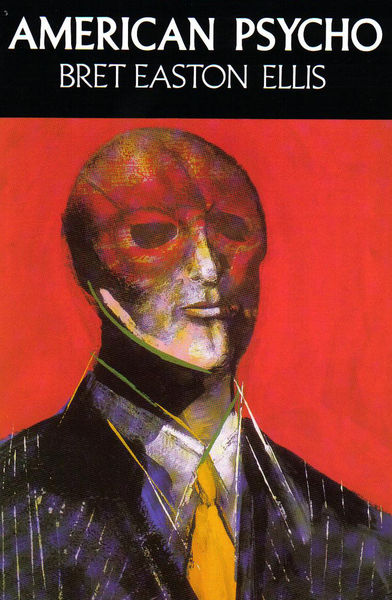
In the movie adaptation, which views about 1000x more tame now that I’ve read the book, Christian Bale’s performance of Patrick Bateman is almost a comedic xerox Ellis’ novel Bateman. It’s a very faithful adaptation, with every single scene and every single line of dialogue being lifted from the novel, just reorganizing and rearranging what characters say certain lines, but the sheer graphicness, brutality, and detail of in the novel overpowers the reader and leaves them with a dreadful hole the size of the sun, while the movie is haunting, it will make you laugh more than cower, or even force you to take breaks during scenes because your stomach is churning.
If someone writes a character or paints a painting meant to be seen one way, but everyone sees it another, is the book or painting a failure, even if it’s beloved? How much should intent be considered when making or consuming art? If an artist clarifies intention, should that effect how something is experienced and understood?
The answer: I don’t know… Just enjoy… I have to return some videotapes.
-c
Catscratch – a blog

 whereiscecelio
Leave a comment